
What is a Manual Treadmill? A Comprehensive Guide
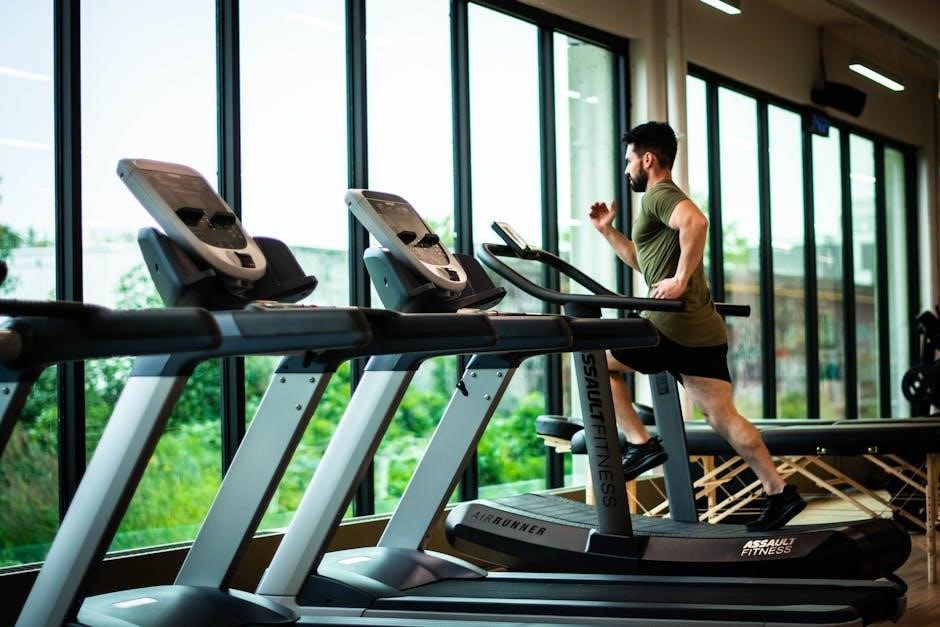
Manual treadmills are fitness machines powered by human effort, offering a self-propelled walking or running experience without electricity. They provide a fantastic cardio workout!
Manual treadmills represent a compelling alternative to their motorized counterparts, offering a unique and engaging approach to cardiovascular exercise. Unlike traditional treadmills, these machines don’t rely on an electric motor to move the belt; instead, the user’s own walking or running motion drives the system.
This fundamental difference creates a distinctly different workout experience, demanding greater muscular engagement and offering a more natural gait. They’ve gained popularity among fitness enthusiasts seeking a challenging, eco-friendly, and often more affordable option.
Historically, manual treadmills were primarily found in clinical settings for gait analysis and rehabilitation. However, advancements in design and construction have made them increasingly accessible for home and commercial use. This guide will delve into the specifics of manual treadmills, exploring their benefits, differences from motorized models, and how to choose the right one for your fitness needs.
What Differentiates a Manual Treadmill?
The core distinction of a manual treadmill lies in its propulsion system – or rather, the lack of a motor. Motorized treadmills utilize an electric motor to rotate the belt, dictating the pace for the user. Manual treadmills, conversely, require the user to initiate and maintain the belt’s movement through their own stride.
This self-powered design fundamentally alters the biomechanics of the workout. Users actively engage more muscle groups, particularly in the legs and core, to drive the belt forward. This increased effort translates to a higher caloric expenditure and improved muscular endurance.

Furthermore, manual treadmills often feature a more responsive and natural feel, mirroring outdoor running or walking more closely. The speed is directly correlated to the user’s effort, providing immediate feedback and control. This contrasts with the sometimes-delayed response of motorized models.
Key Components of a Manual Treadmill
A manual treadmill, while simpler in design than its motorized counterpart, comprises several crucial components. The running belt, typically multi-layered for durability and comfort, is central to the experience. Beneath it lies the deck, providing the surface for the belt to glide upon – its quality significantly impacts cushioning and noise levels.
The frame, usually constructed from steel, provides structural support and stability. Handrails offer balance and support, though their design varies between models. Many manual treadmills include a console displaying basic metrics like speed, distance, time, and estimated calories burned, often powered by batteries.
A key element is the resistance mechanism, which can be adjustable on some models, allowing users to increase the challenge. Finally, leveling feet ensure stability on uneven surfaces, and transport wheels facilitate easy movement and storage.
Benefits of Using a Manual Treadmill
Manual treadmills empower users with control, boost cardiovascular health, and enhance endurance—all while offering a natural, engaging, and effective workout experience.
Low Impact Exercise
Manual treadmills excel in providing a low-impact workout, making them ideal for individuals seeking to minimize stress on their joints. Unlike running on concrete or even some motorized treadmills with firmer cushioning, the belt offers a degree of shock absorption.
This is particularly beneficial for people recovering from injuries, those with arthritis, or anyone prone to joint pain. The self-propelled nature encourages a more natural gait, reducing the jarring impact often associated with high-intensity running.
You control the pace, allowing you to start slowly and gradually increase intensity as your fitness level improves. This controlled progression further minimizes the risk of strain or injury. Walking on a manual treadmill is gentler on the knees, hips, and ankles, promoting a comfortable and sustainable exercise routine for a wider range of fitness levels.
Calorie Burning & Weight Management
Manual treadmills are remarkably effective tools for calorie burning and achieving weight management goals. Because you actively power the belt, your body engages more muscle groups compared to a motorized treadmill, leading to a higher energy expenditure.
This increased effort translates directly into more calories burned during each workout session. The intensity is directly proportional to your effort – the faster you walk or run, and the steeper the incline (if adjustable), the more calories you’ll burn.
Consistent use, combined with a healthy diet, can significantly contribute to weight loss and improved body composition. Manual treadmills offer a convenient and accessible way to incorporate regular cardiovascular exercise into your routine, supporting long-term weight management success and overall health improvements.
Convenience & Accessibility
Manual treadmills shine in terms of convenience and accessibility, fitting seamlessly into various lifestyles. Unlike their motorized counterparts, they don’t require a power outlet, allowing placement in virtually any room – a home office, bedroom, or even a smaller apartment.

This portability is a significant advantage for those with limited space or who frequently move. You can enjoy a walking or running workout whenever you desire, without being tethered to a specific location.
Furthermore, the simplicity of operation makes them accessible to users of all fitness levels. No complicated console or programming is needed; simply step on and start moving! This ease of use encourages regular exercise, promoting a healthier and more active lifestyle for everyone.
Cost-Effectiveness Compared to Motorized Treadmills
Manual treadmills generally represent a significantly more cost-effective fitness solution compared to motorized models. The absence of a motor and complex electronic components translates directly into a lower purchase price, making them accessible to a wider range of budgets.
Beyond the initial investment, ongoing costs are also considerably reduced. Without a motor, there’s no electricity consumption, leading to savings on your utility bills. Maintenance requirements are also typically simpler and less frequent, further minimizing expenses.
For individuals seeking an effective cardio workout without breaking the bank, a manual treadmill offers an excellent value proposition. It delivers the benefits of treadmill exercise at a fraction of the cost of a motorized alternative, proving a smart and economical choice.
Manual Treadmill vs. Motorized Treadmill: A Detailed Comparison
Manual treadmills differ from motorized versions by relying on user power for belt movement, offering a more natural, self-paced workout experience and greater control.
The Role of the User in Propulsion
Unlike motorized treadmills, a manual treadmill demands you be the engine. Your own stride and leg power directly drive the belt’s movement. This fundamental difference shifts the workout dynamic significantly. You aren’t simply matching the pace of a machine; you’re actively creating it.
This user-controlled propulsion system means speed is directly proportional to effort. Want to go faster? You need to push harder and take quicker steps. Slow down? Ease off the pressure. It’s an incredibly responsive system.

Because of this direct connection, manual treadmills often encourage a more natural gait and foot strike. You’re less likely to overstride, as the belt won’t pull you forward artificially. This can lead to improved running form and reduced risk of injury. Essentially, you are in complete control of your workout intensity and pace.
Impact on Workout Intensity
Manual treadmills inherently offer a different intensity profile compared to their motorized counterparts. The intensity is directly tied to the user’s effort – a steeper incline or faster stride immediately translates to a more challenging workout. There’s no preset program dictating the pace; you set the limits.
This can be both a benefit and a challenge. Beginners might find the initial effort demanding, as there’s no assistance from a motor. However, this also means a quicker path to building strength and endurance.
Experienced users appreciate the ability to finely tune intensity. Subtle adjustments in stride length and foot pressure create nuanced changes in resistance. Furthermore, the constant engagement of stabilizing muscles contributes to a full-body workout, boosting calorie burn and improving overall fitness. It’s a truly adaptable exercise experience.
Space & Portability Considerations
Manual treadmills generally boast a smaller footprint than motorized models, making them ideal for apartments, smaller homes, or limited workout spaces. Many designs prioritize foldability, allowing for convenient storage under beds or in closets when not in use. This is a significant advantage for those conscious of space constraints.
Portability is another key benefit. Lacking a motor and complex electronics, manual treadmills are typically lighter and easier to move. Some models even feature wheels for effortless relocation within a home or transport to different locations.
However, even with these advantages, consider the dimensions carefully. While more compact, they still require sufficient clear space around them for safe operation. Always measure your intended workout area before purchasing to ensure a comfortable and secure experience.

Choosing the Right Manual Treadmill
Selecting a manual treadmill requires careful consideration of your fitness goals, available space, and budget to ensure a satisfying and effective workout experience.
Factors to Consider: Belt Size & Frame Quality
When evaluating manual treadmills, the belt size is paramount for comfortable and safe exercise. A longer and wider belt accommodates various strides and body types, preventing awkward movements or potential falls. Consider your height and typical stride length; taller individuals generally require longer belts.
Equally crucial is the frame quality. A robust, steel frame ensures stability and durability, especially during vigorous workouts. Look for a frame with a low center of gravity to minimize wobbling. Welding quality is a key indicator – smooth, consistent welds suggest a well-constructed treadmill.
Don’t overlook the deck beneath the belt. A cushioned deck absorbs impact, reducing stress on joints. Higher-quality decks utilize multiple layers of cushioning for optimal support. Inspect the belt material too; durable, multi-ply belts resist wear and tear, extending the treadmill’s lifespan. Prioritizing these factors guarantees a stable and long-lasting fitness investment.

Budget & Features: Finding the Sweet Spot
Manual treadmills span a wide price range, from basic models to those with advanced features. Establishing a budget beforehand is essential. Entry-level options typically offer fundamental functionality – a walking surface and basic resistance; As your budget increases, you can expect improvements in belt quality, frame construction, and cushioning.
Consider desired features. Some manual treadmills include incline adjustments, allowing for varied workout intensity. Others boast digital consoles displaying metrics like speed, distance, and calories burned. However, remember that more features often translate to a higher price tag.
Prioritize features aligned with your fitness goals. If you primarily walk, a simple model may suffice. For runners or those seeking challenging workouts, an incline adjustment is beneficial. Finding the “sweet spot” involves balancing your budget with the features that will maximize your enjoyment and effectiveness.
User Weight Capacity & Durability
Manual treadmills, like all fitness equipment, have a maximum user weight capacity. Exceeding this limit compromises the machine’s structural integrity and voids the warranty. Always verify the weight capacity before purchasing, ensuring it comfortably accommodates all potential users.
Durability is crucial for long-term investment. Look for treadmills with robust steel frames and high-quality belts. A thicker, multi-ply belt resists wear and tear better than thinner alternatives. Check user reviews for feedback on the treadmill’s longevity and build quality.
Consider the warranty offered by the manufacturer. A longer warranty period indicates greater confidence in the product’s durability. Regular maintenance, as outlined in the safety section, also significantly extends the treadmill’s lifespan, ensuring years of reliable performance.
Maintenance & Safety Tips
Regular upkeep and mindful operation are vital for a manual treadmill’s longevity and your safety; inspect frequently and always warm up properly!
Regular Cleaning & Lubrication
Consistent cleaning is paramount for maintaining your manual treadmill’s performance and extending its lifespan. After each use, wipe down the walking belt with a soft, damp cloth to remove sweat, dust, and debris. Avoid abrasive cleaners, as these can damage the belt’s surface.
Lubrication is equally crucial, though manual treadmills require less frequent lubrication than their motorized counterparts. Typically, silicone-based lubricant should be applied to the belt every 25-50 hours of use, or as indicated in your treadmill’s manual. Apply sparingly, following the manufacturer’s instructions, to prevent slippage and reduce friction.
Periodically, inspect the frame for any loose bolts or screws and tighten them as needed. A vacuum cleaner can be used to remove dust from under the treadmill and around the frame. Ignoring these simple maintenance steps can lead to premature wear and tear, potentially compromising your workout experience and the treadmill’s functionality.
Safe Usage Practices & Warm-up Routines
Prioritizing safety is essential when using a manual treadmill. Always start with a thorough warm-up, including dynamic stretches like leg swings and arm circles, to prepare your muscles for exercise. Begin walking at a slow pace to acclimate before increasing speed or incline.
Maintain proper form throughout your workout – keep your back straight, engage your core, and avoid leaning excessively on the handrails. Handrails are for balance, not support. Be mindful of your surroundings and avoid distractions.
Cool down with static stretches after each session. Never step off a moving belt; always bring it to a complete stop before dismounting. If you experience any pain or discomfort, stop immediately. Consult a healthcare professional before starting any new exercise program, especially if you have underlying health conditions;